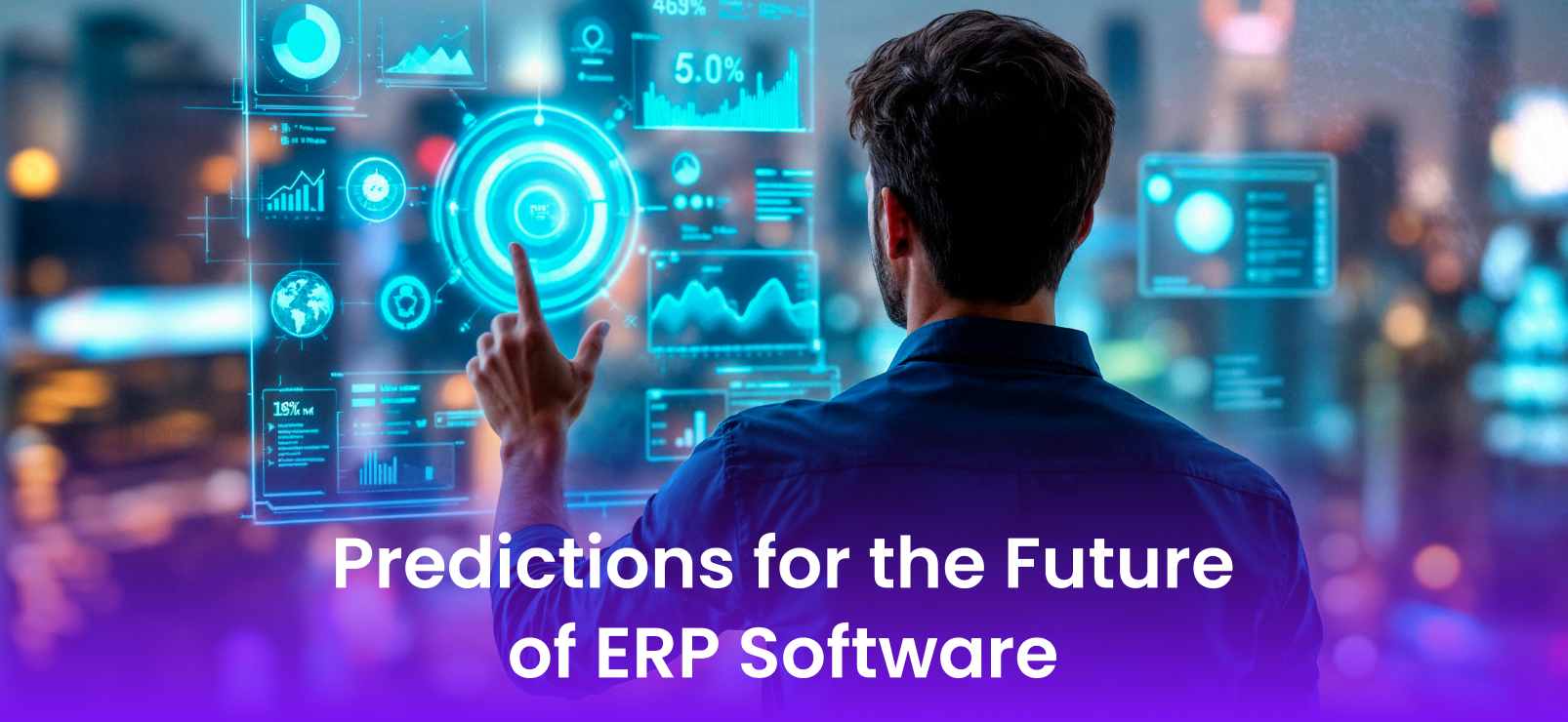
Predictions for the Future of ERP Software
ERP software has become an essential tool for manufacturing SMEs, enabling businesses to address operational challenges more effectively and efficiently. By integrating an ERP system into their operations, companies can streamline workflows, reduce costs, improve production processes, and position themselves for long-term growth. As organizations increasingly prioritize digital transformation, ERP systems must continue to evolve to meet changing business needs, accommodate new technologies, and support more agile, data-driven decision-making. With this in mind, here are five key predictions for the future of ERP systems, particularly for manufacturing SMEs.
Wider Adoption of ERP Systems
As younger generations enter the workforce, the demand for user-friendly, modern ERP systems is expected to grow. Traditional ERP interfaces are increasingly being replaced by more intuitive designs that resemble consumer technologies. Businesses adopting these systems benefit from higher efficiency and engagement, while vendors are pressured to upgrade legacy systems to meet evolving user expectations. For manufacturing SMEs, this means ERP features that are simpler to navigate and more aligned with everyday technology habits.
IoT-Enabled ERP
ERP systems are moving towards interconnectedness, linking core business processes with IoT devices, third-party applications, and external data sources. IoT-enabled ERP allows seamless communication between the office and the shop floor. With API-supported systems, data from production lines can be transmitted in real-time, providing instant alerts and accurate updates on inventory levels and cost calculations. Manufacturers, such as those in trailer production, benefit greatly from this enhanced connectivity, as it improves operational transparency and ensures precise inventory control.
AI Integration Beyond Basic Voice Assistants
Artificial intelligence is set to redefine ERP systems. While tools like Siri and Alexa have introduced voice-activated assistance for consumers, AI in ERP takes this further for manufacturers. AI-powered assistants can analyze shop floor data, detect anomalies, and provide actionable insights, enabling faster and more informed decision-making. By automating complex data analysis, AI not only streamlines production but also improves overall operational efficiency, helping manufacturers optimize resources and reduce downtime.
Mobile-First ERP Solutions
Mobile access is becoming a critical component of ERP software. With real-time updates on the shop floor, mobile ERP apps allow managers to respond immediately to production issues, supervise operations remotely, and ensure adherence to schedules. Supervisors can check product availability, issue maintenance orders, or update work data instantly, minimizing wasted resources. For manufacturing SMEs, mobility enhances responsiveness and ensures that critical decisions can be made promptly, regardless of location.
Flexibility to Adapt to Changing Needs
In manufacturing, rapid changes in production processes, product configurations, suppliers, and customer demands are common. Future ERP systems must be flexible enough to adapt to these shifts. A robust ERP allows users to create new product categories, support evolving business processes, and send automated notifications when products are ready for shipment. Flexible ERP systems ensure that sales teams have timely information, enabling faster delivery and better customer satisfaction, while supporting long-term growth.
ERP trends clearly specify that future systems will do more than track operations; they will integrate devices, departments, suppliers, and customers into a unified, intelligent ecosystem. AI-powered ERP, in particular, is expected to evolve into a proactive tool, offering recommendations to optimize every aspect of a business and becoming the strategic brain behind operations.
How CERP Suite Can Help Future-Proof Your ERP Strategy?
CERP Suite offers comprehensive ERP solutions that simplify operations, optimize processes, and deliver real-time insights. Its modules for accounting, inventory, sales, HR, and supply chain help manufacturers automate workflows, improve accuracy, and enhance productivity. With cloud accessibility and flexible customization, CERP Suite unifies all departments, enabling businesses to adapt quickly, reduce inefficiencies, scale efficiently, and maintain a competitive edge for long-term growth.
Final Thoughts
The future of ERP software for manufacturing SMEs is being shaped by mobility, AI, IoT connectivity, user-friendly interfaces, and flexible workflows. Companies that embrace these trends are poised to improve efficiency, reduce costs, and enhance decision-making. Modern ERP solutions, such as CERP Suite, provide the tools necessary to unify operations, gain real-time insights, and stay competitive in an evolving business landscape. The ERP of tomorrow will not just manage data, it will guide businesses toward smarter, faster, and more strategic decisions.
Ready to modernize your ERP system? Let’s discuss
Contact Us Now!
Like what you see? Share with a friend.
In this article

CERP Suite is a comprehensive ERP software with modules for accounting, inventory, sales, and purchases throughout various industries. Accessible globally via cloud or on-premise, it strengthens businesses with simplified operations, scalability, and convenience to achieve their goals efficiently from anywhere.

Amna Shahid is a technical content writer with extensive experience in writing field. With a degree in literature and prior experience in creative writing, she has established a strong knowledge of writing technical blogs, conversion-driven web pages, and online guides. This expertise allows her to create clear, engaging content that simplifies complex concepts for all audiences, enhances user experience and drives business productivity for CERP Suite.
Related Articles

ERP
5 Things to Keep in Mind Before Buying an ERP
Choosing an ERP system is one of the most important decisions a business will make. It’s not just another software…
ERP
Tips to Improve Accounting With an ERP System
Accurate accounting is essential for informed financial decisions and overall organizational efficiency. Implementing an ERP (Enterprise Resource Planning) system is…
ERP
Predictions for the Future of ERP Software
ERP software has become an essential tool for manufacturing SMEs, enabling businesses to address operational challenges more effectively and efficiently.…
ERP
ERP Features & Benefits Custom Manufacturers Need
For custom manufacturers, efficiency isn’t just a competitive advantage; it’s a survival requirement. When every job is different, every project…
ERP
Essential Management and Business Tools
Running a modern business in 2025 needs more than spreadsheets and manual processes; it demands efficiency, integration, and automation. Businesses…
ERP
Cloud vs. On-Premises ERP Which is Safer for Your Data?
With cyberattacks becoming more dependable and refined, businesses face a crucial question: which ERP system offers better data protection: cloud-based…
ERP
Why ERP Systems Are Critical for Success in Omnichannel Ecommerce
As global eCommerce continues to grow at a surpassing pace, businesses face the challenge of keeping up with customer expectations…
ERP
How to Find the Right Wholesale Distribution ERP System
Running a wholesale distribution business is no easy feat. From managing inventory across multiple warehouses to maintaining smooth supplier relationships,…
Saas
How IT Unlocks Business Value In a SaaS Ecosystem
IT departments are transforming with businesses moving from traditional on-premises ERP systems to cloud-based SaaS solutions. This shift goes beyond…
ERP