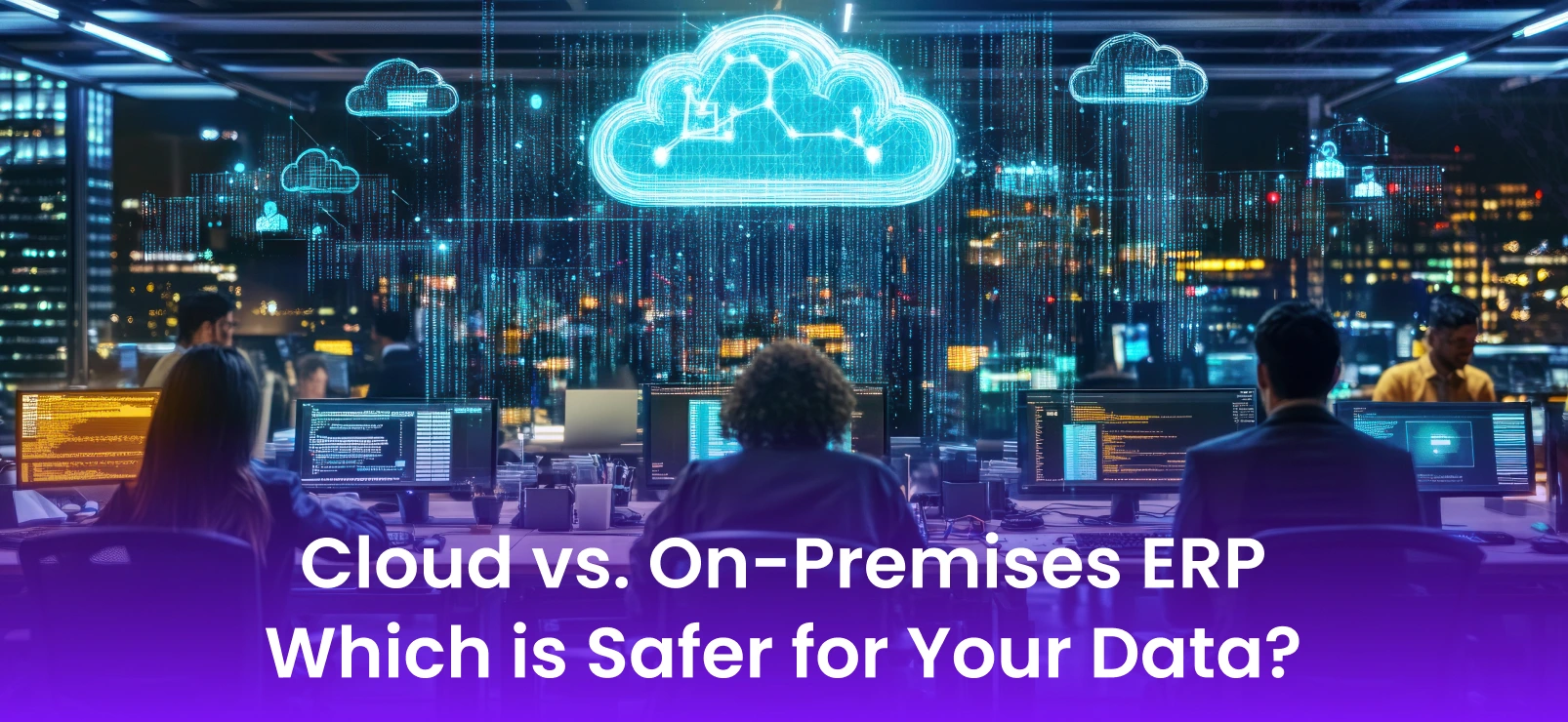
Cloud vs. On-Premises ERP Which is Safer for Your Data?
With cyberattacks becoming more dependable and refined, businesses face a crucial question: which ERP system offers better data protection: cloud-based or on-premises? Data security is no longer just an IT-related issue; it’s a key business priority. A breach can lead to financial loss, legal complications, and long-term damage to customer trust. Choosing the right ERP deployment model can make all the difference in keeping your data secure.
This blog explores the key differences between cloud and on-premises ERP systems, evaluates their security capabilities, and explains how businesses can protect sensitive information in an evolving digital landscape.
Understanding the Security Difference
The debate between cloud and on-premises ERP systems centers on who manages the infrastructure and how data is secured.
On-Premises ERP Systems
An on-premises ERP is hosted locally within your company’s servers and network. This setup gives you full control over security protocols but also places the entire responsibility on your internal IT team. You must handle everything, from software updates and firewall management to intrusion detection and disaster recovery.
While some organizations prefer this control, it comes with challenges:
- High upfront costs for servers and infrastructure.
- Continuous maintenance and updates by in-house staff.
- Increased vulnerability to modern cyber threats if security measures aren’t updated regularly.
Simply put, while you hold the keys, you’re also solely responsible for guarding them.
Cloud-Based ERP Systems
A cloud ERP solution transfers data hosting, maintenance, and security responsibilities to a third-party provider. These systems are hosted in safe data centers, often using world-class platforms such as Amazon Web Services (AWS) or Microsoft Azure.
Vendors offer:
- Automatic updates and patches to address vulnerabilities quickly.
- Regular data backups and recovery systems.
- Continuous monitoring to detect and prevent breaches.
Instead of investing heavily in infrastructure, businesses pay a subscription fee that covers both usage and protection. This shared-responsibility model means your vendor is as invested in data safety as you are; their reputation relies on it.
Why Cloud ERP Offers Stronger Security
Cloud-based ERP systems are designed with built-in, enterprise-grade security that protects data throughout its lifecycle, from transmission to storage.
1. Advanced Encryption and Compliance
Data in cloud ERPs is encrypted both at rest and in transit, ensuring that even if obstructed, it remains unreadable. Major cloud providers comply with strict international standards like GDPR, HIPAA, and PCI DSS, helping businesses meet their regulatory obligations easily.
2. Proactive Threat Detection
Cloud vendors use cybersecurity experts who endlessly monitor for suspicious activity. They conduct regular penetration tests and apply the latest security patches instantly across their networks, something that’s often complex for in-house teams to match.
3. Built-in Disaster Recovery
Cloud ERP platforms automatically back up data across several geographic regions, minimizing downtime in case of cyber incidents or natural disasters. This ensures business continuity, which can be challenging to guarantee with on-premises systems.
Strengthening Data Security in the Cloud
Even with the most secure ERP system, your internal practices play a crucial role in keeping data safe. Here’s how businesses can improve their security:
1. Control User Access
Implement role-based permissions to ensure employees only access data relevant to their responsibilities.
- Onboarding: Train new users on security best practices.
- Role Changes: Update permissions promptly when responsibilities shift.
- Offboarding: Revoke access immediately when employees leave.
2. Use Multi-Factor Authentication (MFA)
Passwords alone are no longer sufficient. MFA adds a second layer of verification, such as a one-time code or biometric authentication, preventing unauthorized access even if credentials are compromised. Studies show MFA can block over 99% of common account breaches.
3. Monitor Third-Party Integrations
Many data breaches stem from weak links in connected applications. Review all third-party integrations regularly and ensure each complies with your internal security policies.
Your Data’s Best Defense: Cloud or On-Premises ERP?
While on-premises ERP gives you full control, it also requires significant investment, expertise, and constant vigilance. Cloud ERP, on the other hand, delivers enterprise-grade protection with scalability, proactive monitoring, and regulatory compliance built in. For most modern businesses, the cloud offers a safer, more sustainable path to secure data management.
Conclusion
Protecting business data is not just about firewalls and passwords; it’s about smart strategy and secure systems. Cloud-based ERP solutions offer a balance of accessibility, reliability, and advanced security that most on-premises setups struggle to match. By combining strong vendor protections with strong internal practices like MFA and access control, you can secure your organization’s most valuable asset: its data.
CERP Suite: Redefining ERP for the Modern Enterprise
CERP Suite provides both cloud and on-premises ERP solutions designed to match your business needs. Our cloud ERP offers secure, real-time access to data through encrypted channels, regular backups, and automated security updates. Whether managing inventory, accounting, or HR operations, CERP Suite ensures your data remains protected and your systems run smoothly. With built-in compliance, scalability, and global accessibility, we help you strengthen your business infrastructure while keeping your data safe, anytime, anywhere.
Protect Your Business Data With Our ERP
Contact Us Now!
Like what you see? Share with a friend.
In this article

CERP Suite is a comprehensive ERP software with modules for accounting, inventory, sales, and purchases throughout various industries. Accessible globally via cloud or on-premise, it strengthens businesses with simplified operations, scalability, and convenience to achieve their goals efficiently from anywhere.

Amna Shahid is a technical content writer with extensive experience in writing field. With a degree in literature and prior experience in creative writing, she has established a strong knowledge of writing technical blogs, conversion-driven web pages, and online guides. This expertise allows her to create clear, engaging content that simplifies complex concepts for all audiences, enhances user experience and drives business productivity for CERP Suite.
Related Articles
ERP
What’s The Real ROI Of An ERP For Manufacturers?
ERP systems are one of the most significant investments a manufacturer can make, impacting nearly every aspect of operations. While…
ERP
Using Retail ERP Software To Grow Your Business
The retail landscape has changed dramatically over the last few years. Shifting customer expectations, supply chain disruptions, rising operational costs,…
ERP
Why ERP Systems Are Critical for Success in Omnichannel eCommerce
As global eCommerce continues to grow at a surpassing pace, businesses face the challenge of keeping up with customer expectations…
ERP
How ERP Helps Improve The Accuracy Of Financial Data And Reporting
Financial accuracy lies at the heart of effective business operations, influencing planning, budgeting, and strategic decision-making. Even minor errors in…
ERP
Reasons Why Retailers Need an Integrated POS System?
Modern retail demands more than just transaction processing. Businesses now need to understand customer behavior, control inventory in real time,…
ERP
How Does A WMS Different From An ERP System?
When businesses start looking for inventory or warehouse software, the terms Warehouse Management System (WMS) and Enterprise Resource Planning (ERP)…
ERP
Benefits Of Mobile ERP: What’s In It For You And Your Business
As businesses operate in an increasingly dynamic environment, staying connected and responsive is essential. Many companies have moved from traditional…
ERP
5 Things to Keep in Mind Before Buying an ERP
Choosing an ERP system is one of the most important decisions a business will make. It’s not just another software…
ERP
Tips to Improve Accounting With an ERP System
Accurate accounting is essential for informed financial decisions and overall organizational efficiency. Implementing an ERP (Enterprise Resource Planning) system is…
ERP